KWIMBA MODEL PROVES THAT PROPER INTERVENTION IN AGRICULTURE WORKS
6/23/2026
March 2026 will remain in the memories of Kwimba chickpea farmers for many years to come, thanks to the bold and decisive actions taken by the freshman Member of Parliament for Kwimba Constituency, Mr. Cosmas Mtesigwa Bulala.
In that month, the MP organized a groundbreaking curtain-raiser for his brainchild, the “EKARI YA MBUNGE” programme. The event, graced by the Kwimba District Commissioner, Hon. Ng’wilabuzu Ludigija, was made successful by the mammoth turnout of small-scale farmers who attended in large numbers to hear what their youthful leader had to tell them.
True to their expectations, Hon. Bulala flamboyantly reminded his electrified voters that they had not made a wrong choice. “You didn’t pick a dunderhead for an MP; you elected a smart leader,” he confidently remarked.
This was after declaring the programme officially open and hinting at its very content. In a bid to increase his constituents’ productivity and eventually boost their income, he announced that he would freely provide 15 tractors—one for every ward in the constituency, which has 15 wards—700 tons of chickpea seeds, an extension officer for every ward, soil-testing kits for every chickpea-producing ward, motorcycles for every officer, and other important amenities.
Recently, an international company emerged as a buyer and promised to provide a floor price of 800 shillings per kilo whenever the market offers a lower price. However, it expects to buy at a higher price than that, depending on market conditions. In other words, willing farmers will have a form of market insurance shielding them from market fluctuations.
Additionally, the company will pay farmer groups a commission of 30 shillings for every kilo collected in their respective wards. In the event that a buyer collects 5,000 tons of chickpeas from a particular ward, the group in that ward will laugh all the way to the bank with 150 million shillings. This is exclusive of the prevailing buying price, and it is the groups themselves that will decide how to use that money.
The parliamentarian’s vision, as he has repeatedly stated, is to lift more than twenty thousand residents of Kwimba Constituency out of poverty by empowering and equipping them in their own mainstay activity.
By April 2026, true to his promises, all the inputs had been delivered to farmers, ready to usher in a new chickpea production season. Farmers lined up in their respective wards and villages to receive bags of seed. Tractors were handed over to ward leadership committees, while extension officers were hired and equipped with the necessary facilities, including motorcycles and soil-testing kits.
Soon after, intensive training was conducted by pulses experts led by Dr. Said Silim, a world-renowned pulses seed breeder. While working for the International Crops Research Institute for the Semi-Arid Tropics (ICRISAT) in Nairobi, Kenya, he bred all the pigeonpea and chickpea seed varieties currently used in East and Central Africa.
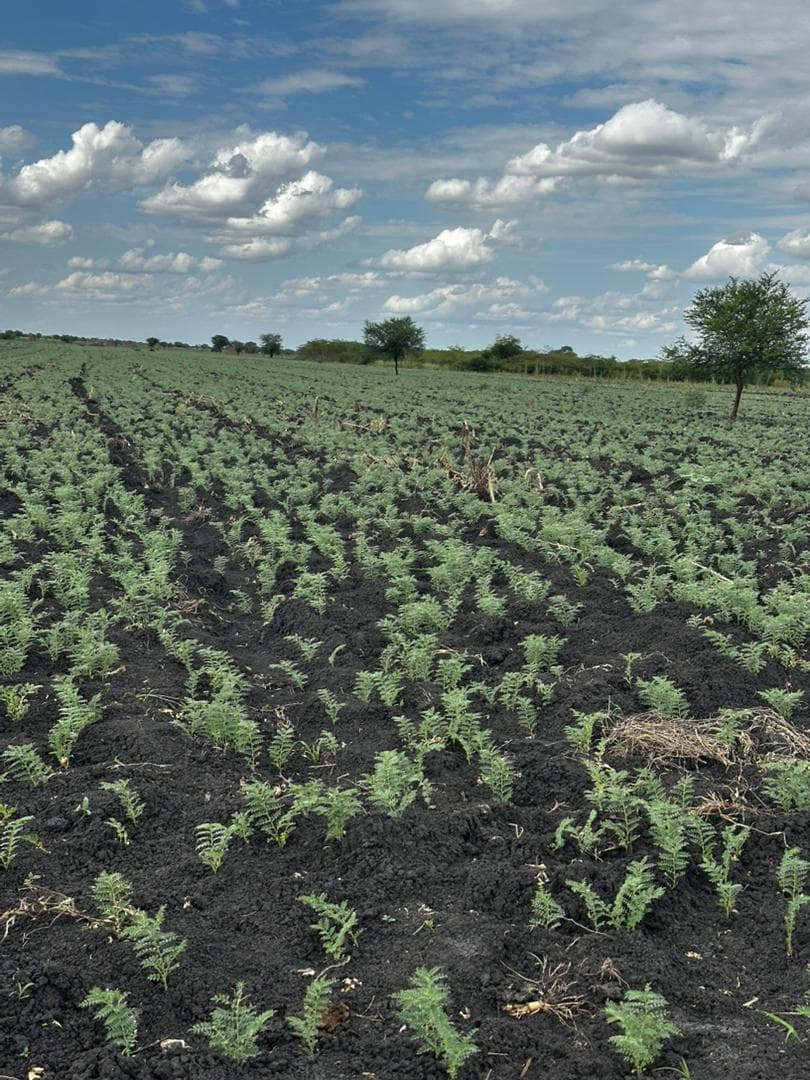
As I write this, about 98 percent of farmers in Kwimba have already sown the seeds, and many fields have turned green.
But that is not as important as the chain of events that has resulted from this groundbreaking intervention. While the MP’s stated target was to supply inputs and related services for a single acre for every household, it is evident that many acres were not covered, bearing in mind that many households own multiple acres. As a result, farmers had to dig deeper into their pockets to cater for the additional plots they own.
Usually, at a time such as this, farmers would be buying seeds from traders—who largely buy chickpeas and other crops at the end of the season—at 12,000 shillings per kilo. However, following the intervention of the Ekari ya Mbunge Programme, which supplied enormous quantities of seed to farmers at no cost, the price of commercial seed has fallen to 4,000 shillings per kilo—a decline of nearly 70 percent.
This ripple effect is being heavily felt by Kwimba farmers, who joyfully told me that this year people should expect a bumper harvest.
Well, the economics behind the downward spiral in seed prices is simple. Price is a function of demand and supply. When demand remains constant and supply increases, prices tend to decrease. Conversely, when demand rises while supply remains constant or declines, inflation occurs.
In the Kwimba case, the number of farmers has remained relatively constant, but the supply of free seed changed the trajectory. Suddenly, there was too much seed in the market, which reduced farmers’ demand for commercial seed. To stay in business, seed traders were forced to lower their prices.
I am not sure whether the MP saw this coming, but the supply of seed on such a scale was a masterstroke that will be studied by many for a long time. It stands as a reminder that proper intervention in agriculture works.